
Industry stakeholders have strongly criticised Pakistan’s gas pricing mechanism during a public hearing held by the Oil and Gas Regulatory Authority, arguing that a guaranteed rate of return on assets has undermined efficiency and inflated profits of public gas utilities despite persistent energy shortages.
The hearing focused on reviewing the existing pricing formula for state owned gas transmission and distribution companies, which allows a fixed and guaranteed return on assets. Participants highlighted that due to this structure, Sui Northern Gas Pipelines Limited and Sui Southern Gas Company recorded profits of 21 percent during the financial year 2024 25.
It was disclosed that both companies earned a 21 percent return on their net regulated fixed asset base, generating Rs36.75 billion for SNGPL and Rs19.97 billion for SSGC from sales of locally produced gas. Additional returns were also earned from re gasified liquefied natural gas, with SNGPL making Rs7.33 billion and SSGC earning Rs6.67 billion.
Consultancy firm KPMG, engaged by OGRA, presented a revised return framework based on equity rather than assets. The proposal suggests an equity based return calculated through the Capital Asset Pricing Model, with 80 percent as a base return and 20 percent linked to efficiency benchmarks to incentivise better performance.
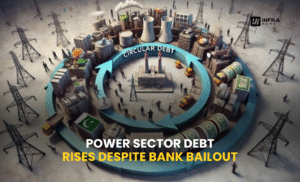
Private sector representatives criticised the existing system, citing lack of data transparency and absence of separation between indigenous gas and RLNG costs. They argued that guaranteed profits were being passed on to shareholders while consumers faced rising prices, contributing to circular debt and inefficiencies in the gas sector.
Gas utility executives defended the current framework, stating that rising profits were largely due to high interest rates and significant infrastructure investments. They cautioned against abrupt changes to the pricing model, warning that applying power sector benchmarks to heavily leveraged gas utilities could threaten financial stability. OGRA is expected to carefully evaluate stakeholder input before finalising any reforms to ensure sustainability and sector wide balance.