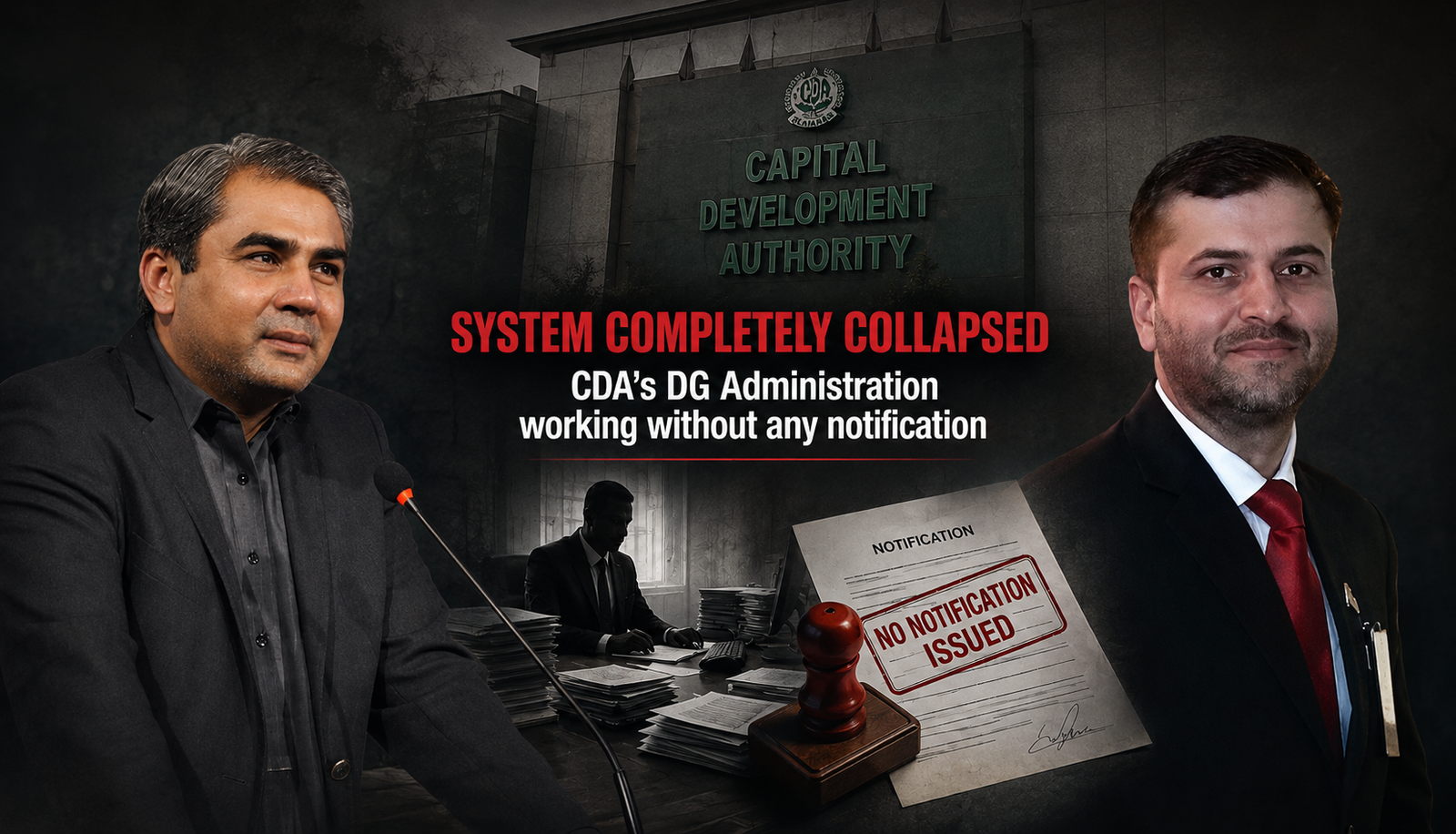

ISLAMABAD: With all deputation seats now consumed, the Capital Development Authority (CDA) has shifted to placing favoured officers through an “attachments” mechanism, allowing outsiders to occupy high-profile posts that, under service rules, should be filled only through direct recruitment against vacant quota positions.
According to rules, the authority can requisition officers only against posts reserved for direct recruitment, not those meant for promotion. However, after exhausting all nineteen such positions, the CDA has begun posting officers on attachment in influential slots across the organisation.
Most recently, two Islamabad Capital Territory (ICT) officers from the Pakistan Administrative Service both in BS-18 have been handed key assignments. Usman Ashraf has been placed as Deputy Director General Land (BS-19), while Bushra Iqbal has been given charge as Deputy Financial Advisor-II (BS-19). Both positions carry significant operational and financial clout.
These latest arrivals come in addition to nineteen deputation officers already working in the authority, nearly all holding lucrative seats, many of them above their substantive grades. Among them is BS-19 Secretariat Service officer Kashif Niaz, who currently holds the dual positions of Director Discipline and Director Revenue. The combination places him at the centre of departmental inquiries while also overseeing revenue matters.
Similarly, PAS officer Umber Gillani, who is in BS-18, continues to serve as Deputy Director General Administration (BS-19). Her position gives her command over the authority’s large vehicle fleet, government accommodations, hostels and several administrative assets. She has also previously held prized posts such as DDG Land.
Another BS-18 officer, Abeera Dilawar, is simultaneously holding three BS-19 roles, Director HR-III, Director Estate Management-III, and the Project Management Unit where she works directly under Member Administration Talat Gondal. The concentration of responsibilities has raised eyebrows within CDA’s internal cadres.
Other out-of-cadre placements continue to shape the authority’s power structure. Commerce and Trade Group officer Kinza Afsar, in BS-18, is serving as Director HR-II (BS-19). PAS officer Tabinda Tariq, also in BS-18, holds the BS-19 charge of Director Estate Management-II, a position that makes her custodian of Islamabad’s multi-billion-rupee commercial estate portfolio. Another PAS officer in BS-18 has been posted as Director General Environment (BS-20) despite senior BS-19 officers of the environment cadre serving under her, highlighting the widening imbalance in seniority.
The list extends further. Information Group officer Shahid Rafique (BS-18) is serving as Director Public Relations (BS-19), while Humaira Irshad, also in BS-18, has been posted as Deputy Director General Resources (BS-19). In the sanitation wing, BS-18 Office Management Group officer Waqas Ali Khan is working as Director Sanitation (BS-19), whereas another OMG officer in the same grade holds the post of Director Coordination (BS-19). Awais Manzoor Tarar, an OMG officer in BS-18, has been placed as Director General Environment (BS-20). The highly influential seat of Deputy Financial Advisor-I (BS-19) is currently held by Audit and Accounts officer Aitzaz Ahmed (BS-18), while Syed Ali Hasnain, an OMG officer in BS-18, is functioning as Director Mega Parks (BS-19).
Perhaps the most striking example is that of PAS officer Anam Fatima, in BS-18, who is simultaneously holding three senior positions: Chief Officer Metropolitan Corporation Islamabad (BS-20), Director DMA (BS-19), and Deputy Director General Enforcement (BS-19).
The increasing number of officers brought in through deputation and attachments many holding posts above their grades and outside their cadres is highly questionable.
The practice has generated deep concern within the CDA’s own service groups.
Officials argue the practice undermines merit, erodes institutional autonomy and severely limits promotion opportunities for CDA officers who have served within the organisation for decades.
However, they believe that in absence of true officers association their rights are not being protected in an efficient manner.